
 Facebook
 X
X LinkedIn
 Forward
Understanding Cognition Through Auditory & Vestibular Pathways in Parkinson's disease
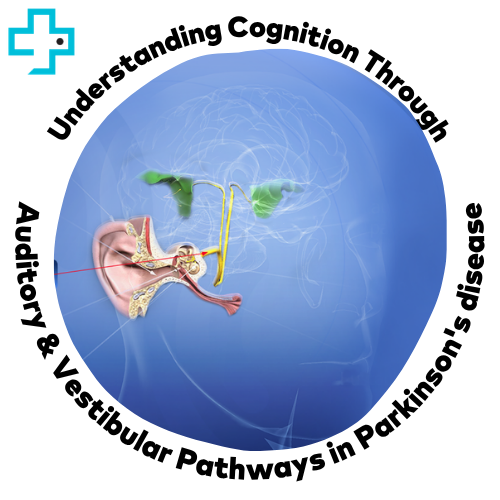
This course examines how the auditory and vestibular systems, known as our senses of hearing and balance, shape cognition in Parkinson’s disease.
Participants will learn how these sensory pathways support attention, memory, navigation, and communication, and how early changes in hearing and balance can signal cognitive vulnerability before more visible symptoms emerge. The session introduces foundational auditory and vestibular neuroanatomy, outlines sensory declines commonly observed in Parkinson’s, and highlights emerging biomarkers and therapeutic strategies aimed at earlier detection and improved quality of life. Drawing on ongoing research at FAU, the course emphasizes the importance of multisensory assessment in understanding and addressing cognitive change in aging and neurodegenerative disease.
Syllabus | |
Understanding Cognition Through Auditory & Vestibular Pathways in Parkinson's disease Introduction, Auditory & Vestibular Systems Auditory & Vestibular in PD Biomarkers & Therapeutics Quiz Additional Resources Evaluation Credit Certificate | |
Target Audience
This activity is designed to meet the educational needs of:
- Nurses
- Physicians
- Physician Assistants
- Psychologists
Learning Objectives
By the end of this activity, learners will be able to:
- Describe the roles of the auditory and vestibular systems and how they support cognitive processes.
- Explain how sensory degradation increases cognitive load and contributes to challenges in daily functioning.
- Describe PD-related sensory changes.
- Describe potential early biomarkers and therapeutics.
Course summary
- 1.00 AAPA Category I CME
- 1.00 AMA PRA Category 1 Credit™
- 1.00 ANCC
- 1.00 APA
- 1.00 Participation
Claudia is a Neuroscience Ph.D. candidate at FAU’s Stiles-Nicholson Brain Institute, conducting her doctoral research in the Hearing, Tinnitus, and Balance Research Laboratory under the mentorship of Dr. Ali Danesh. Her work investigates inner-ear sensory processing, specifically auditory impairment and vestibular dysfunction, and its relationship to cognitive decline in older adults.
Her preliminary findings in Parkinson’s disease indicate that concurrent multisensory decline acts as a functional amplifier, exacerbating clinical symptom severity.
Claudia is dedicated to elucidating the neural mechanisms driving phenotypic variability in Parkinson's disease, ultimately informing targeted diagnostic and therapeutic interventions for historically underrepresented patient populations.
Claudia Alvarez has no relevant financial relationships to disclose at this time.
Content Reviewer
Sneha Mantri, MD, MHA, FAAN has no relevant financial relationships to disclose at this time.
 In support of improving patient care, Parkinson's Foundation is jointly accredited by the Accreditation Council for Continuing Medical Education (ACCME), the Accreditation Council for Pharmacy Education (ACPE), and the American Nurses Credentialing Center (ANCC), to provide continuing education for the healthcare team.

This activity was planned by and for the healthcare team, and learners will receive 1.00 Interprofessional Continuing Education (IPCE) credit for learning and change.
Physicians
Parkinson’s Foundation designates this enduring activity for a maximum of 1.00 AMA PRA Category 1 Credit(s)™. Physicians should claim only the credit commensurate with the extent of their participation in the activity.
Nurses
Parkinson's Foundation designates this enduring material for a maximum of 1.00 ANCC contact hours. Participants should claim only the credit commensurate with the extent of their participation in the activity.
Physician Assistants

Parkinson’s Foundation has been authorized by the American Academy of PAs (AAPA) to award AAPA Category 1 CME credit for activities planned in accordance with AAPA CME Criteria. This activity is designated for 1.00 AAPA Category 1 CME credits. PAs should only claim credit commensurate with the extent.
Psychologists
 Continuing Education (CE) credits for psychologists are provided through the co-sponsorship of the American Psychological Association (APA) Office of Continuing Education in Psychology (CEP). The APA CEP Office maintains responsibility for the content of the programs. 1.00 CE hours.
Available Credit
- 1.00 AAPA Category I CME
- 1.00 AMA PRA Category 1 Credit™
- 1.00 ANCC
- 1.00 APA
- 1.00 Participation